Use cases
Have your close ones testify on real cases anyone can check
Aristhor freezes the fingerprint of one or more files (photo, video, contract…) in a blocksthor. Then you have identified people, called your warrantors, attest to what this file or these files represent. Each use case below is an example that could be real. In the last case, #40, the sports feat, you can test and check how it works yourself.
A blocksthor proves that a file existed on a given date, that it has not changed and that identified people have guaranteed it. It does not prove that its content is true.
Case #1 · Family · Justice
Parental abduction - A child living under a false name
Scene: after a separation, one parent leaves with the child and has them live under another identity. For months, often years, the other parent gathers the elements of their investigation: audio recordings, messages, meetings, trips.
Blocks: each investigation document (audio recording, screenshot of messages, report of a meeting, photos and notes from a trip) is frozen as soon as it is received through its SHA-256d fingerprint. The file stays with the parent: only its fingerprint goes into the blocksthor, nothing sensitive is published.
Warrantors: the parent has the existence of each document certified by those who saw or heard it: a relative present at a meeting, a friend who received a message, the lawyer who listened to the recording, a priest or any trusted person they confided in. Each signs with their own key: “I was made aware of this document, on this date”.
Trips: when relatives travel, including abroad, to find the child's trace, their photos, videos and travel notes become new blocks, warranted by those who made the trip.
Benefit: before a judge or any other authority, sometimes years later, the parent presents a dated file that cannot be altered afterwards and is backed by identified witnesses. No one can claim any more that a recording was made up for the occasion.
To find out more about the parental abduction of the son of Aristhor's founder and his life under a false name: sous-faux-nom.org
Scene: when Lou is born, her parents and grandparents each write her a letter and record a video message, to be discovered on her 18th birthday.
Block: the fingerprint of each letter and of the video. The files are kept separately, on a USB stick and in a digital safe.
Warrantors: each author guarantees their own message, and those present at the family dinner guarantee the whole.
Why it helps: 18 years later, Lou checks that the messages have not been rewritten in the meantime, even if one of the authors is no longer there to say so.
Scene: an 88-year-old mother lives alone. Three children living far away, carers taking turns, a nurse twice a day. Tensions arise quickly ("nobody came on Sunday").
Blocks: every week, a photo of the care log book, the prescriptions and the visit reports.
Warrantors: the carers and the nurse for their own visits, and the child who came at the weekend.
Why it helps: a shared history that calms the family, and that also helps if abuse or exploitation of a vulnerable person is suspected, or when applying for a legal protection measure. The children can share the task of adding blocks by locking the blocksthor before each addition.
Scene: after a serious diagnosis, a 60-year-old man writes his advance directives and names his trusted person. He fears his wishes will be challenged when the time comes.
Block: the signed advance directives, the appointment of the trusted person, and a short video in which he explains his choices in his own words.
Warrantors: his family doctor, his trusted person and his two children. Each one attests having read these wishes on this date.
Why it helps: nobody can claim that the document was changed afterwards. Each update becomes a new block, and the last block always carries the most recent wishes.
Limit: the blocksthor complements the official filing of the directives (medical record, online health account), without replacing it.
Scene: a couple leaves their old dog at a boarding kennel for three weeks. When they come back, the dog has lost weight and is limping.
"Drop-off" block: photos and video of the dog on arrival (gait, coat, weight on the kennel's scales), health record and treatment instructions. The manager guarantees "received in this condition".
"Pick-up" block: the same photos on departure, and the report from the vet seen the next day.
Non-profit version: an animal shelter creates one blocksthor per animal (care, neutering, adoption contract), guaranteed by the vet and then by the adopter.
Scene: Julien lends Sarah €3,000 for her flat deposit. She will pay back €250 a month for 12 months.
Block 1: the IOU as a PDF (amount, schedule, date), with its fingerprint. Sarah signs it as a warrantor: the debtor acknowledges the debt.
Warrantors: two mutual friends who were there when they agreed. They attest that the agreement exists, not that Sarah can pay.
Next blocks: each repayment is a new block (screenshot of the transfer). Julien signs it to acknowledge receipt.
Why it helps: if they disagree two years later ("I'd already paid you back €1,500"), the dated and countersigned chain settles it, without a notary for a small amount.
Limit: above €1,500, French law requires a written document; the blocksthor does not replace the signed IOU, it dates it and surrounds it with witnesses.
Scene: Marc lends his drone (€1,400) to his brother-in-law for a wedding.
"Departure" block: 6 photos of the drone's condition (scratches, serial number, battery level) and a video of it starting up. The borrower warrants the block: "received in this condition".
"Return" block: the same photos on return, warranted by the lender. If a propeller is broken, the lender refuses the warranty with a reason ("rear propeller broken"), and this refusal stays visible in the call.
Non-profit version: a reuse centre or a neighbourhood "tool library" (hammer drill, trailer, marquee) uses one blocksthor per item. Each loan adds a block, and the item's history becomes its maintenance log.
Scene: the sale of a 2014 car to a friend of a friend for €6,500.
Block: the mileage on video (dashboard, engine running), the condition of the bodywork, the roadworthiness test and the transfer certificate.
Warrantors: the buyer and the mechanic who test-drove the car with them.
Why it helps: the visible condition of the car on the day of the sale is frozen and countersigned by the buyer: any discussion is limited to genuine hidden defects.
Scene: a TV ordered online arrives with a cracked screen. The seller suspects it was broken after delivery.
Block: the unboxing video, in a single take, from the sealed parcel (label and condition of the box visible) to switching the screen on.
Warrantors: the person present at the unboxing, and the delivery driver if they agree to sign "parcel handed over in this condition". A possible refusal, with its reason, also remains visible.
Why it helps: the video is frozen in the blocksthor a few minutes after delivery, and nobody can claim it was shot days later. For a business, a blocksthor of goods received serves as an inspection log.
Scene: a sculptor sells his bronzes through a gallery. In twenty years, buyers or their heirs will need to prove that a piece is authentic.
One block per work: photos from every angle, distinctive details (signature, foundry marks, casting flaws), dimensions and certificate of authenticity.
Warrantors: the foundry and the gallery owner. At each resale, the artist or his estate adds a block guaranteed by both the seller and the buyer.
Why it helps: a continuous provenance, dated and countersigned by identified people, that does not depend on a register kept by a single intermediary.
Scene: an amateur rugby club raises €8,000 to help the family of a seriously injured player. Donors want to know where the money goes.
Blocks: the fundraiser statement at closing, then each expense (home adaptation, wheelchair, transfer to the family), with its description.
Warrantors: the club's treasurer and president, and the family, who attest that they received each payment.
Why it helps: donors look at the blocksthor made public and follow every expense. The receipts, which contain personal data, stay with the treasurer: only their fingerprint appears in the blocks.
Scene: a student flatshare, 4 flatmates and a private landlord.
Block: photos and video room by room, saved on move-in day. The 4 flatmates and the landlord all warrant the same block.
Move-out: a new block of photos on the day of departure, guaranteed by the landlord; any disputed damage leads to a reasoned refusal.
Why it helps: everyone signs with their own key, even a flatmate who arrives 6 months later (new "move-in addendum" block). On move-out, the fingerprints are compared, and nobody can say "I never saw these photos".
Scene: after a burglary or water damage, the insurer asks for proof of what was in the home, and in what condition. The invoices have often disappeared.
Yearly block: a room-by-room video, photos of valuables (serial numbers, jewellery, paintings, computer equipment) and scanned invoices, gathered in a single block by their Merkle root.
Warrantors: a relative or friend who visited the home and attests "these items were indeed in their home on this date".
Why it helps: one new block a year is enough to show that the items were there before the loss, without relying on anyone's memory. The files stay with you, ideally also outside the home (encrypted digital vault).
Scene: Inès finds a stain on her bathroom ceiling, below Mr Duval's flat. The insurance assessor will not come for three weeks.
Block 1: photos and video of the ceiling and a moisture reading, on the day of discovery. Mr Duval, who came to see it, guarantees it.
Next blocks: the plumber's visit (invoice, photo of the repaired leak), guaranteed by the plumber; then the state of the ceiling a week later, to show how it changed.
Why it helps: the assessor receives a file dated document by document. No one can claim the stain grew because it was reported late.
Scene: a bar opens at the foot of a block of flats. Music until 3 a.m., several nights a week. Verbal complaints to the manager have no effect.
Blocks: for each night concerned, a recording made with a sound level meter app (decibel level and time visible on screen) and a short video taken from the window.
Warrantors: the neighbours on the exposed floors, who each sign "I suffered this noise that night", and the building manager to whom the record is sent.
Why it helps: instead of a petition signed all at once, the town hall, the mediator or the judge get a dated series, night after night, attested by identified neighbours. The frequency and duration of the nuisance become visible.
Scene: two neighbours in the countryside agree on where a hedge and a fence will go, without calling in a land surveyor.
Block: photos of the stakes with their GPS coordinates, a signed sketch and the written agreement ("the fence will be set 50 cm east of the stake").
Warrantors: both neighbours and their spouses. The children, who will one day inherit the land, can find the agreement through its permanent reference.
Good to know: this is not an official boundary survey. It is the dated memory of an agreement, useful to keep it from being forgotten or disputed twenty years later.
Scene: over 15 years, a couple renovates their house: roof, boiler, loft insulation, drainage.
Blocks: each job is a block: quote, invoice, before / during / after photos, boiler servicing certificates.
Warrantors: the tradesperson who did the work guarantees their block: "work carried out by me, as shown in the photos".
On sale: the sellers give the buyer the blocksthor's permanent reference (fingerprint of the zero-genesis block). The buyer checks the whole history and can start their own blocksthor whose first block quotes this reference.
Why it helps: "the loft insulation was redone in 2019" is no longer a seller's claim, it is a dated chain guaranteed by the tradespeople.
Scene: a minor collision on a roundabout. Both drivers fill in a joint accident report, but the other party later changes their account with their insurer.
Block saved on the spot: photos of both vehicles, their position, the road signs, and a photo of the report signed by both drivers, before each one leaves with their copy.
Warrantors: the passenger, and the cyclist who witnessed the scene and agreed to leave his contact details. He receives the call for warrantors by email that same evening.
Why it helps: a copy of the report "completed" afterwards no longer matches the photo frozen on the spot: its fingerprint proves the original state of the document.
Next block: the garage's quote and photos of the repairs, guaranteed by the mechanic.
Scene: a plasterer renovates a house. The client pays in instalments.
Blocks: at each stage (partitions up, joints taped, painting), a block with photos and the interim invoice.
Warrantors: the client, and the project manager or a neighbour as witness if the client is away.
Why it helps: in a dispute over a hidden defect ("the insulation was never fitted"), there is the photo of the insulation, warranted by the client before the partitions were closed. This is valuable in the event of a warranty claim and for insurers.
Scene: a freelance developer delivers a website to a client. Two months later, the client disputes having received some features and withholds the balance of the invoice.
Blocks: at each milestone, the archive of deliverables (code, mock-ups, documentation), the acceptance report and the matching invoice.
Warrantors: the client, who guarantees "deliverable received and tested", or refuses with a precise reason ("contact form not working").
Why it helps: everyone knows exactly what was delivered, when, and what the client approved. Discussions are about dated facts, and reasoned refusals become a list of fixes rather than a dispute.
Scene: a restaurant must record every day the temperature of its fridges, deliveries received and cleaning. A log "filled in all at once" the day before an inspection shows.
Blocks: every evening, the day's log (photo of the sheet or export from the connected thermometer) goes into the team's blocksthor.
Warrantors: with a TEAM plan, the cook on duty and the manager guarantee the day's log.
Why it helps: during a health inspection or a disputed food poisoning case, the restaurant proves its records were made day by day, with no later changes.
Scene: a market gardener converting to organic farming sells vegetable boxes directly to customers. Some of them ask how he really grows his produce.
Blocks: each season, the invoices for seeds and soil improvers, photos of the plots, sowing and harvest dates.
Warrantors: customers who take part in open days at the farm, and the agricultural advisor monitoring the conversion.
Why it helps: trust rests on a verifiable history rather than a promise. The grower prints the last block's fingerprint on the distribution sheet and publishes it on his website: anyone can see that the history is never rewritten from one season to the next.
Scene: Yanis, an apprentice carpenter, makes his first pieces: a staircase, a window, a custom-made cabinet.
Blocks: each piece in photos, with the plan and the time spent.
Warrantors: his master craftsman guarantees "made by Yanis, under my supervision", and the customer when they were on site.
Why it helps: at his first job interview, Yanis shows a portfolio where each piece is guaranteed by his trainer, not just photos that could come from anywhere.
Scene: Inès, an assistant in a small company, has been receiving humiliating messages from her manager for months, often deleted once read. She hesitates to go to the employment tribunal, lacking evidence she considers solid.
Blocks: each screenshot, exported email or voice message is frozen the same day by its SHA-256d fingerprint. Several files from the same day fit into a single block thanks to the Merkle root.
Warrantors: two colleagues who witnessed scenes in meetings, the occupational doctor who saw Inès, and the staff representative she showed the messages to. Each one attests: "I saw this message, on this date".
Why it helps: a message deleted by its author remains proven in its existence and date, since it was frozen and seen by third parties before being deleted. The record also shows the repetition over time, which lies at the heart of harassment.
Limit: the blocksthor replaces neither the lawyer nor the labour inspectorate nor the commissaire de justice (bailiff). It gives them an orderly, dated and countersigned record.
Scene: an illustrator shows her mascot sketches to an agency during a meeting. Three months later, the agency releases a very similar mascot.
Block saved before the meeting: sketches, source files and moodboard. The deposit is published on Mastodon the same day: the date no longer depends on Aristhor alone, which strengthens the proof of priority.
Warrantors: two colleagues from her studio who saw the work in progress, and possibly the agency's contact if they agree to warrant "received on…".
Why it helps: low-cost proof of prior creation, complementing a dated deposit with an official body, and backed by named witnesses.
Scene: three musicians write a song during rehearsal. Lyrics by Camille, melody by Hugo, arrangement by Nadia. The band has no record deal yet.
Block: the demo recording, the lyrics and the split sheet ("lyrics 40%, music 40%, arrangement 20%").
Warrantors: the three co-writers, each with their own key. The studio's sound engineer can guarantee the recording date.
Why it helps: if the band splits before success comes, the split agreed at the start is dated and signed by all. It complements registration with a collecting society, it does not replace it.
Scene: a master's student writes his dissertation over six months. Before the defence, the plagiarism checker flags strong similarities with a text published online in the meantime by a classmate to whom he had lent a draft.
Blocks: one version of the dissertation every month, with reading notes and drafts.
Warrantors: his internship supervisor and two classmates who proofread chapters while they were being written.
Why it helps: dated and countersigned versions show who wrote what first. The progress of the text, month after month, is itself an argument that is hard to imitate.
Scene: a biology PhD student runs experiments for three years. A rival team is working on the same topic.
Blocks: every week, the scanned pages of the lab notebook, the raw data from the instruments and the analysis scripts, before any processing.
Warrantors: her thesis supervisor and the engineer of the technical platform, who attest that they saw these results on this date.
Why it helps: the priority of a result is established, and the integrity of the raw data can be demonstrated if anyone suspects tampering. Nothing is published before the paper: only fingerprints go into the blocksthor.
Scene: a small team publishes an open-source application. Modified copies, sometimes booby-trapped, circulate on download sites.
Block: for each release, the fingerprint of every published file (macOS, Linux, Windows installers, source code archive), grouped by their Merkle root, and the release notes.
Warrantors: the co-maintainers, who reviewed the code and rebuilt it, each sign with their own key.
Why it helps: users compare the fingerprint of the downloaded file with the one in the block. An attacker would have to replace the file, forge several signatures, and make everyone forget the last block's fingerprint published everywhere by the team. It is the same principle as checking the fingerprint of the Blocksthor Maker "installed application".
Case #31 · Collective decision · Professional / non-profit
Meeting minutes or collective decision
Scene: the general meeting of a sports club, or an informal meeting of co-owners.
Block: the minutes as a PDF. With a TEAM plan, every member of the group can warrant the minutes, even in a large association.
Why it helps: no more "that's not what we voted". A member who disagrees refuses the warranty with a reason, which also records the disagreement. Group information is used to announce the upcoming call for warrantors, so that everyone is ready to warrant the decisions made.
Scene: for 4 years, Mathis has run homework help at a neighbourhood association. He wants to highlight it in his CV and in an accreditation of prior experiential learning (APEL) process.
Blocks: once a quarter, a summary block: hours worked, tasks, photos of activities (with no identifiable children).
Warrantors: the association's president and another volunteer guarantee each block.
Why it helps: instead of a single certificate written from memory, Mathis presents a dated history, guaranteed over the years by identified people.
Journalistic certification of a scene by the witnesses present
A concrete example: a flash flood in a valley, for example in the Var or the Cévennes after a Mediterranean storm. At 6:42 pm, a local resident films the bridge of the main road being swept away. Within the hour, the video spreads on social media, and comments cry "fake" or claim it is a recycled video from 2020.
Block: the original video (raw file, with its metadata), its SHA-256d fingerprint and a factual description (place, time, direction of the shot). The deposit is published on Mastodon at 6:57 pm: the date no longer depends on Aristhor alone.
Warrantors: the 5 neighbours on the riverbank, the village's volunteer firefighter and the local councillor who came on site. Each one warrants: "I was there, this video matches what I saw".
In the newsroom: the regional daily's journalist receives the video and the link to the blocksthor. They check that the file's fingerprint matches, that 7 identified people warranted it, each signing with their own key, and that it was saved before it went viral. They can also contact the warrantors.
Why it is strong: the date proves it came first, the fingerprint proves integrity (no editing afterwards), and the number of witnesses makes the link between the image and reality credible. This is exactly what fact-checking struggles to establish today.
Scene: during a demonstration, a freelance photographer captures a disputed arrest.
Block: they save the raw series of 40 photos in a single block (Merkle root of all the fingerprints: each of the 40 photos remains verifiable on its own), before any editing or cropping.
Warrantors: two other photographers and an observer from an association (a civil liberties association, for example), who were at the same place.
Why it helps: if a single photo is published later, cropped, it can be proved to come from a complete series saved on the spot. This rules out accusations of selection or manipulation, and the lawyer or newsroom has a chain of custody.
Scene: a craftsman finds a social media post claiming he is a crook, shared hundreds of times. The author will delete it as soon as the formal notice arrives.
Block: the screenshots (page address, date and time visible) and a video scrolling through the page and its comments.
Warrantors: three customers who told him about the post, each of whom saw it independently.
Why it helps: quick and inexpensive evidence, pending or in the absence of an official bailiff's report, that the lawyer can put forward. The number of witnesses rules out any claim of fabrication.
Scene: an anglers' association notices, several mornings in a row, foamy water and dead fish downstream from a factory.
Blocks: geotagged photos and videos, temperature and pH readings, and photos of the water samples sealed before being sent to the laboratory.
Warrantors: the members present at each outing, a water bailiff and the mayor of the riverside town.
Why it helps: the chain of custody of the samples is documented, from the river to the laboratory. The analysis report then goes into the blocksthor too, and the whole forms a solid file for the environmental police or the prosecutor.
Whistleblower: protecting evidence before reporting
Scene: an accountant discovers fake invoices in his company. Before reporting it, he fears the documents will disappear, or that he will be accused of fabricating them.
Block: the fingerprints of the documents (invoices, internal emails), not the documents themselves. Nothing confidential is published, and the blocksthor can remain private.
Warrantors: his lawyer, and the union representative or whistleblower support organisation helping him. They attest that they saw the documents on this date.
Why it helps: if the originals are erased from the company's servers, his copies prove they have not changed since they were saved. The date also sets the order of events: the discovery comes before the report, which cannot be passed off as revenge after a dismissal.
Limit: the blocksthor does not exempt anyone from following the legal reporting procedure. It secures the evidence along the way.
The sealed prediction: proving you called it first
Scene: before the World Cup final, Karim tells his friends he knows the exact score, but without revealing it: he wants to seal it.
Block: the fingerprint of a text file containing his prediction ("2-1, goal in the 87th minute") followed by a random sentence, so that no one can find the content by trying every possible score.
Warrantors: his friends guarantee the date it was filed without knowing the content: only the fingerprint is visible.
After the match: Karim publishes the text file. Everyone recomputes the fingerprint in the Blocksthor Reader or Maker: it matches the block's, filed before kick-off.
Beyond the game: the same principle works for a sealed bid, a business idea or the answer to a puzzle: you prove later that you knew beforehand, without revealing anything at the time.
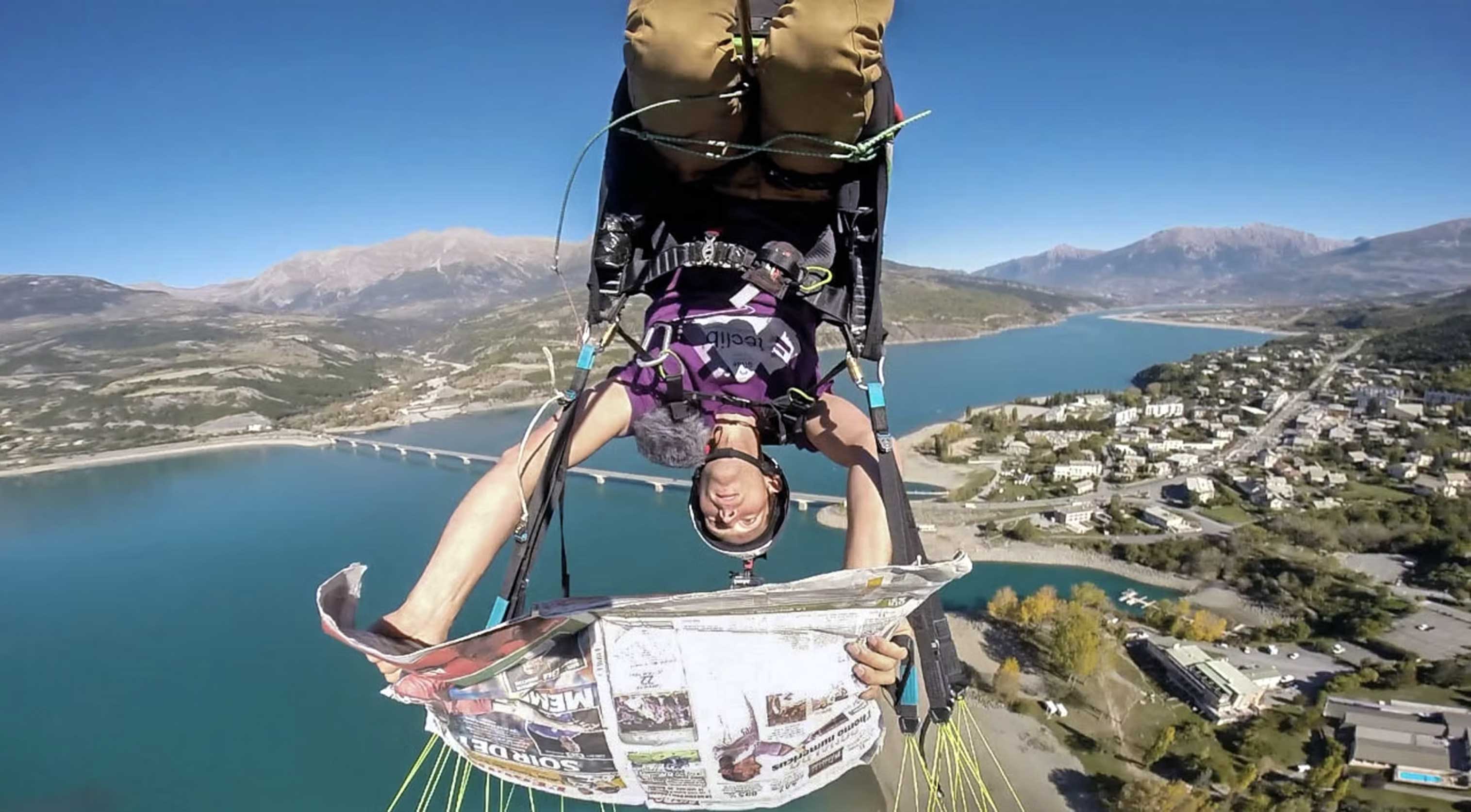
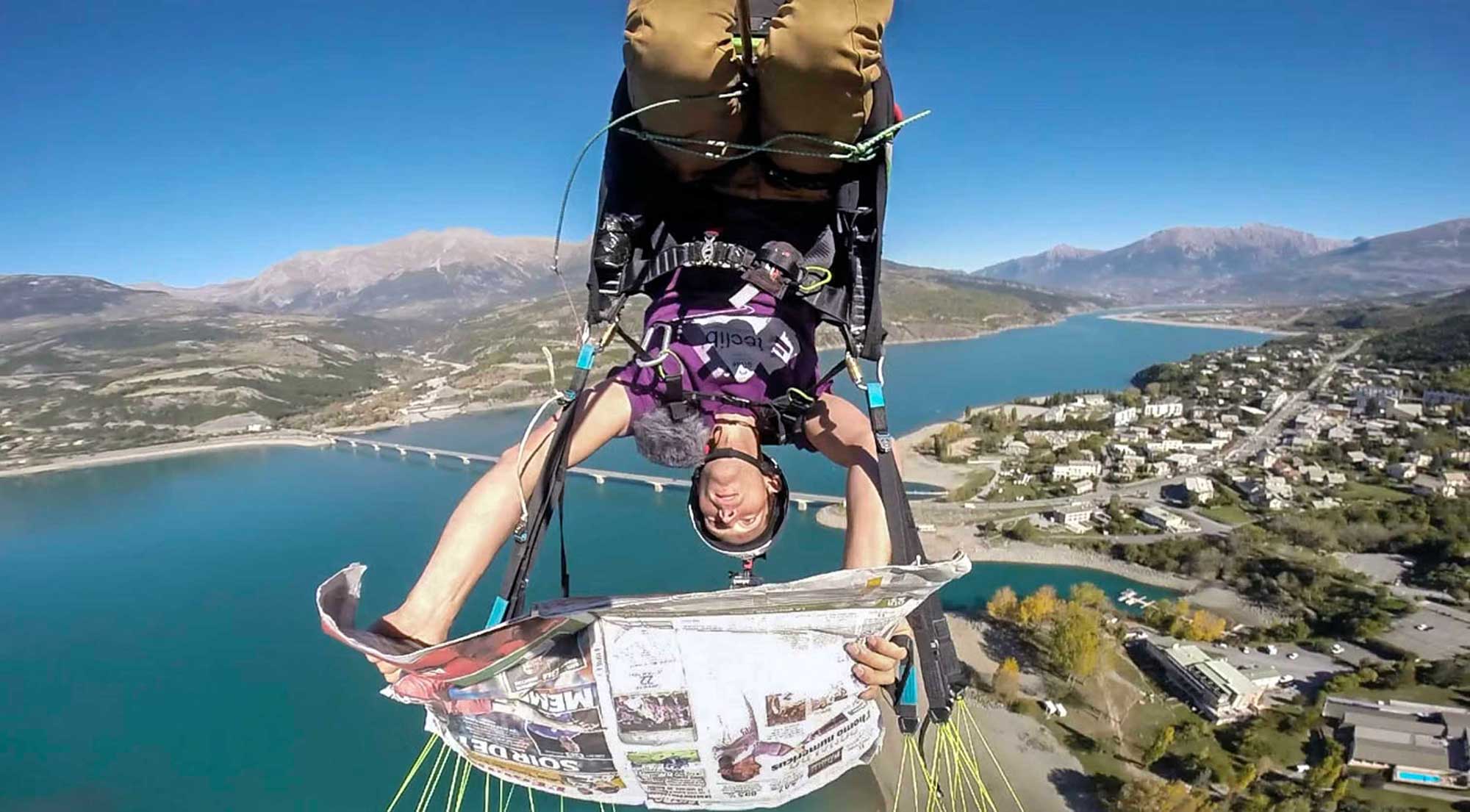
Above the Serre-Ponçon lake, in the French Hautes-Alpes, Alpha, a paraglider pilot, performs "infinity tumbling": his wing spins around him and, each time he passes the vertical, he ends up upside down, held by centrifugal force. He takes the opportunity to… read his newspaper.
Photo taken by the on-board camera, above the Serre-Ponçon lake. The original file is the one of block #2 of SPORTIVA.
1. The scene: a photo taken on board
The photo was taken by a camera fixed to Alpha's gear. Nobody was holding it, it was on board. It freezes the exact moment the pilot passes above his wing, newspaper open.
The problem: such a picture looks impossible. Photo editing? Artificial intelligence? The photo alone proves nothing, and neither does the pilot's word alone.
But that day, his family and friends were there and saw the figure. They are the ones who will testify.
2. How it works in two stages: a fingerprint, then signatures
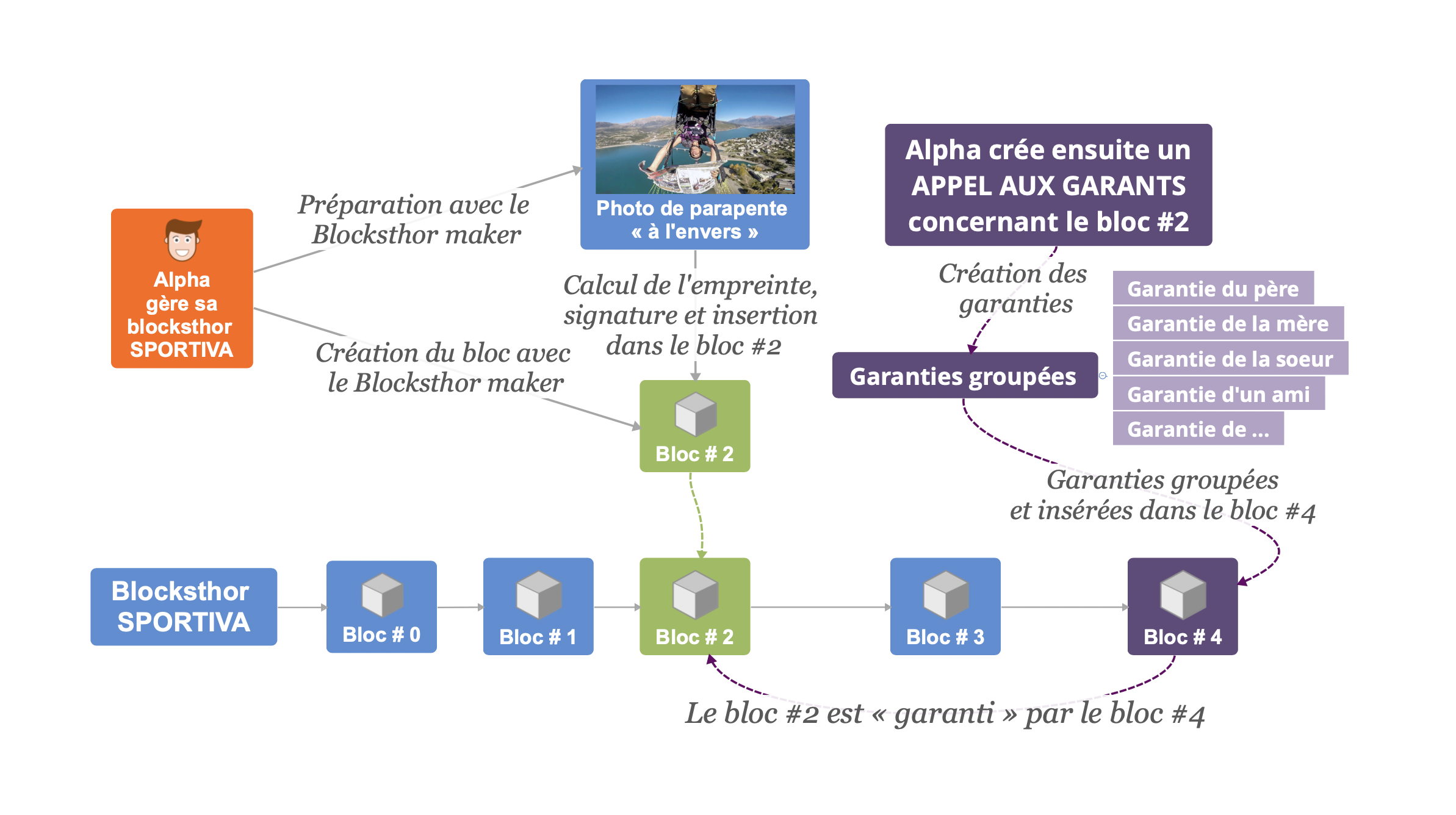
The diagram shows the two stages: Alpha freezes the photo in his blocksthor, then his close ones warrant it.
Alpha manages his SPORTIVA blocksthor: the photo is frozen in block #2, his close ones' warranties are grouped in block #4.
Fingerprint With the Blocksthor Maker, Alpha computes the SHA-256d fingerprint of the photo on his computer. The photo is never sent: only its fingerprint, 64 characters, goes into his blocksthor.
Block #2 The fingerprint is signed with Alpha's private key and inserted in block #2 of his SPORTIVA blocksthor. Each block contains the fingerprint of the previous one: changing the photo or a block would break the chain.
Call for warrantors Alpha creates a call for warrantors for block #2 and invites his father, his mother, his sister and friends who were there that day.
Warranties Each warrantor writes a warranty ("I was there…"), signs it with their own private key and links it to the fingerprint of block #2. A warrantor can also refuse, giving a reason.
Block #4 The warranties are grouped: the fingerprint of each one becomes a leaf of a Merkle tree whose root is written in block #4. Block #2 is now "warranted" by block #4.
3. Seven witnesses who commit their signature
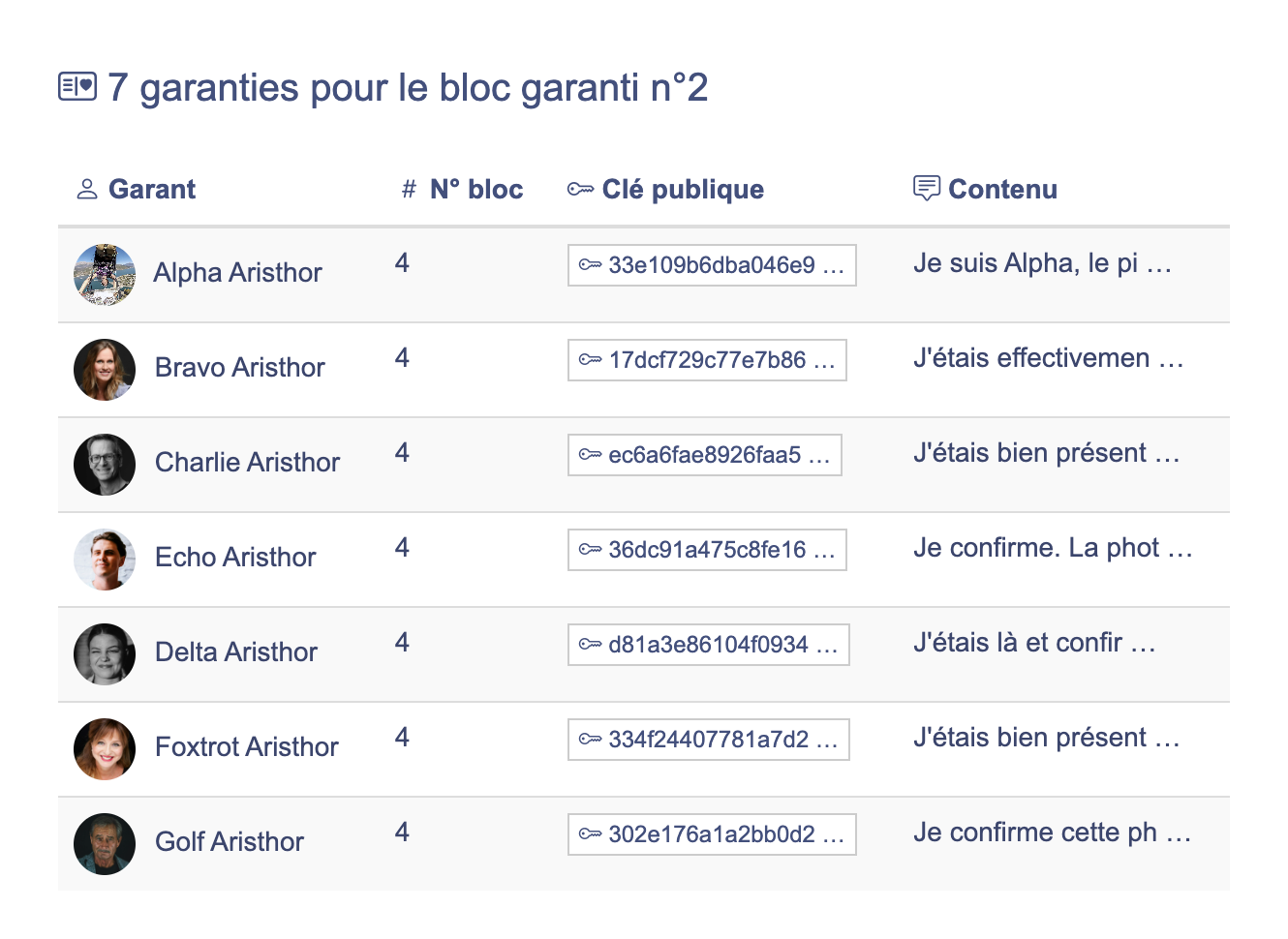
The 7 warranties of block #2, saved in block #4 of SPORTIVA.
The sceptic no longer has to take the pilot's word for it: to doubt the photo, they must assume that seven identified people all lied when signing.
Seven people warranted block #2: six close ones who were there that day, and Alpha himself. Each one signed with their own key, and the fingerprint of their public key is in their warranty.
« I was indeed there, so I confirm that this impressive photo was taken without any trick or artifice. The photo just freezes the movement at the moment the pilot passes the vertical of his paraglider wing, ending up upside down, held by centrifugal force. »
« I was there and I confirm: this photo perfectly matches the frozen reality. The pilot was indeed passing the vertical of his wing while reading his newspaper. »
« I am Alpha, the pilot, so of course I warrant that this photo was taken without any trick above the Serre-Ponçon lake in the Hautes-Alpes, France. »
4. What anyone can check
The photo has not changed by a single byte: download the original file, recompute its SHA-256d fingerprint in the Blocksthor Reader and compare it with the one of block #2.
The 7 signatures are genuine: load the warranties file in the warrantors tab of the Blocksthor Reader, each signature is checked with its warrantor's public key.
No warranty was added, modified or removed: the Merkle tree of the warranties gives back exactly the root fingerprint written in block #4.
SPORTIVA is a real blocksthor: a sequence of signed blocks, each holding the fingerprint of one or more files (paragliding photos, warranties file…), never the files themselves. Download them below, recompute their fingerprint on your computer and compare it with the block's: if they match, the file hasn't changed by a single byte since it was inserted.
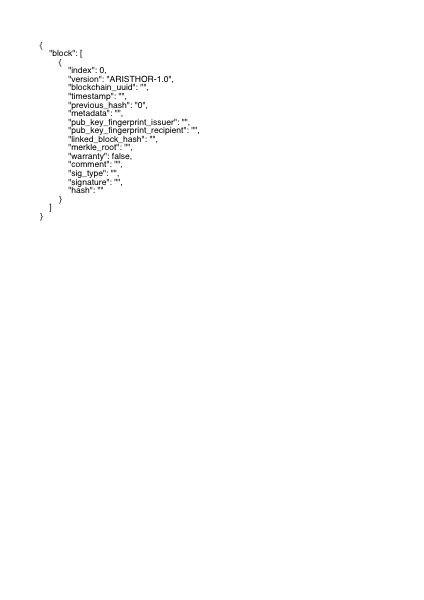
Raw content of the blocksthor
The whole blocksthor with all its blocks, to copy or export then load in the Blocksthor Reader or Maker
The six blocks are numbered from zero to five
Files of the blocksthor
The files whose fingerprint each block holds. Download the files to compute and check the fingerprints yourself
▸ How do I check a fingerprint on my computer?
macOS or Linux, in a terminal opened in the folder of the downloaded file (SHA-256d = SHA-256 applied twice):
Or without a command line: drop the file in the hash tab of the Blocksthor Reader, which computes everything in your browser. Compare the result with the Merkle root of the block.
This block holds 3 files: their fingerprints, in this order, are the leaves of a Merkle tree whose root alone is written in the block. The Merkle tree file downloadable below, 0003_simple_merkle_tree_blocksthor_..., lets you redo the calculation (Merkle proof tool in the “Blocksthor blockchain / Merkle Tree / Creating a Merkle Proof” section of the Blocksthor Reader).
LISEZ-MOI - README - Aristhor.com
----------------------------------

FR
--
Message de confirmation concernant ces deux fichiers photos :

« Ces photos sont bien toutes réelles et réalisées sans trucage. »

Explication méthodologique : un arbre de Merkle incluant le présent fichier a été calculé et c'est l'empreinte racine de l'arbre qui a été insérée dans le bloc.

EN
--
Confirmation message regarding these two photo files:

"These photos are all real and were taken without any manipulation."

Methodological explanation : a Merkle tree including this file was calculated, and the root fingerprint of the tree was inserted into the block.
Warranty block: 7 warrantors attested, each with their own signature, that the photo of block #2 is genuine. The fingerprint of each warranty is a leaf of the Merkle tree whose root is written in the block. The warranties file can be checked and viewed in the “Displaying a block's warrantors” tab of the Blocksthor Reader or Maker.
Charlie Aristhor« J'étais bien présent et je confirme : cette photo correspond parfaitement à la réalité figée. Le pilote passait bien à la verticale de son aile tout en lisant son journal. »
Delta Aristhor« J'étais là et confirme donc que la photo est parfaitement conforme à la réalité que j'ai vue. »
Foxtrot Aristhor« J'étais bien présent et je confirme que l'image est conforme à ce que j'ai vu. »
Golf Aristhor« Je confirme cette photo d'Alpha dans ses oeuvres spectaculaires. J'étais bien présent et impressionné par la dextérité d'Alpha. La photo est parfaitement conforme à la réalité saisie et figée par l'objectif. »
Bravo Aristhor« J'étais effectivement présent et je confirme donc que cette photo impressionnante a été réalisée sans aucun trucage, ni artifice. La photo fige juste le mouvement au moment où le pilote passe à la verticale de son aile de parapente, se retrouvant à l'envers, maintenu par la force centrifuge. »
Echo Aristhor« Je confirme. La photo est vraie. »
Alpha Aristhor« Je suis Alpha, le pilote, du coup forcément je garantis que cette photo est réalisée sans trucage au-dessus du lac de Serre-Ponçon dans les Hautes-Alpes en France. »
Proved: the photo file is identical to the one frozen in block #2, and seven identified people signed, each with their own key, that they were there and that the photo matches what they saw.
Not proved: Aristhor cannot guarantee that the warrantors tell the truth. It makes their testimony named, dated and impossible to change afterwards. For a feat, that is what turns a rumour into an established fact.
Your turn
The same principle works for a personal record, a first ascent in climbing, a swim crossing or a ski jump: a file, its fingerprint, and close ones who commit their signature.